







Deine Trip-Route![]()
10 Tage Trip
Samarkand, Nukus & 8 weitere
Unterkunft
Sonstiges & Hotel
Transportmittel
Car, Train
Samarkand
Tag 1-2
After arrival to Samarkand, transfer to the hotel, rest, first moments. Almost aimless exploration of the city, its restaurants, tea shops and bazaars. We end the day with a visit to the mighty Bibi-Khanum Mosque. This monumental mosque, built by Timur Lenk, was once one of the largest in the world and although now in ruins, its dimensions and decorations are still impressive. The mosque is also linked to an interesting legend about Timur’s wife. In the evening we have an Uzbek dinner where we taste the famous plov and other local specialties.
2
2
Nukus
Tag 2-3
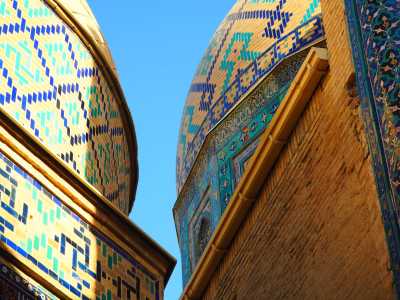
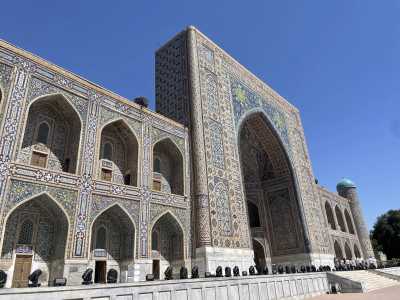
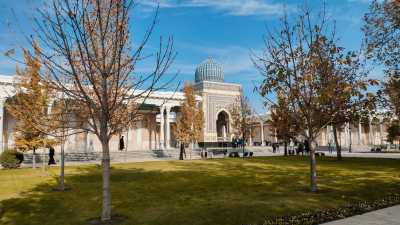
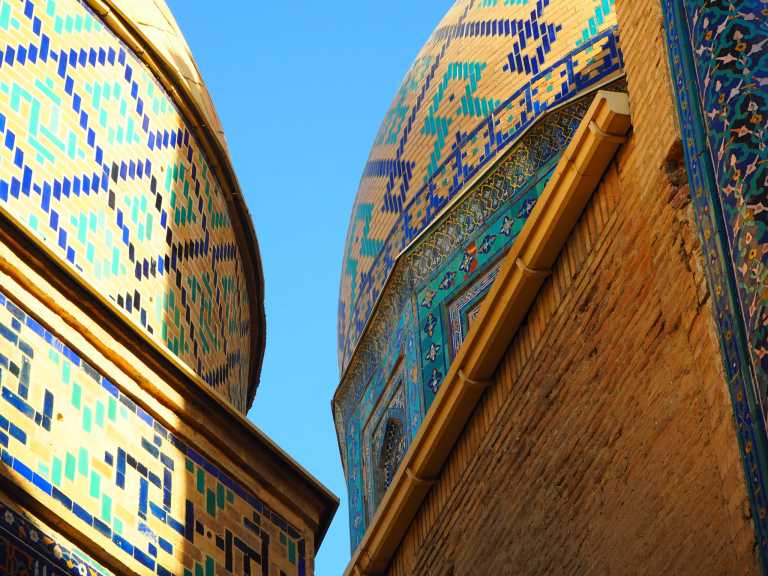
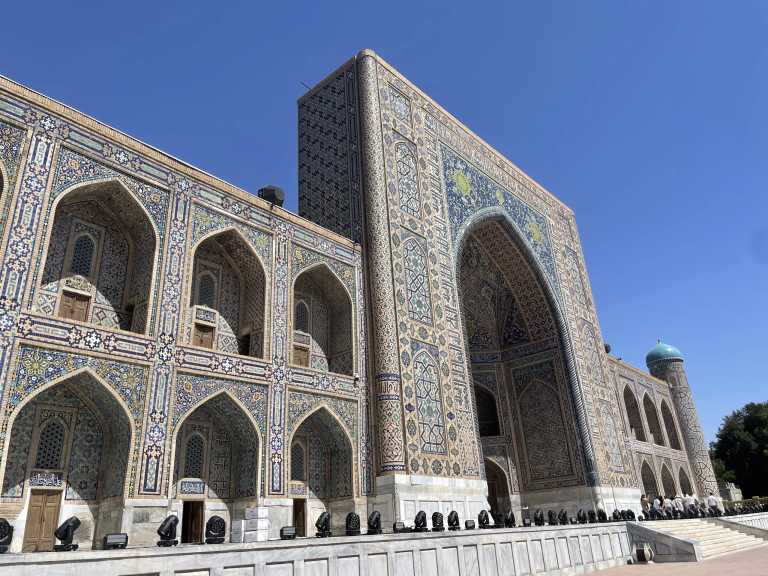
The dazzling capital of Timur Lenk’s empire Today we dedicate a whole day to exploring Samarkand, one of the brightest stars of the Silk Road. We start our visit with the breathtaking Registan Square, one of the most impressive architectural ensembles in Central Asia. Here, we are dazzled by three monumental medreszes (Islamic schools): the Ulugbek Medresze, the Tilla-Kari Medresze with its gilded dome and the Sher-Dor Medresze with its lion motifs. Next, we visit the former mausoleum of Timur Lenk (Tamerlane), the majestic Gur-e Amir complex, an architectural masterpiece with its turquoise dome and ornate interiors. Timur Lenk and some of his family members are buried here. Our next stop is the bustling Siyob Bazaar, Samarkand’s largest and oldest market, where you can get lost in a colourful bustle of spices, dried fruits, breads and handicrafts, while getting a taste of local life. In the early evening at 17:38 we take the night train to Aral Lake. There is a dining car on the train. We will have a real Uzbek authentic experience.
3
3
Aral Sea
Tag 3-4
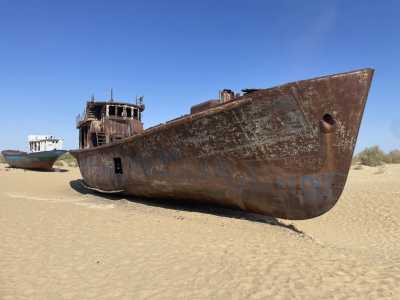
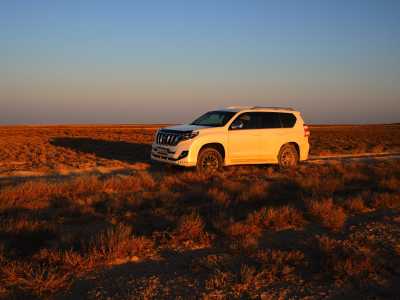
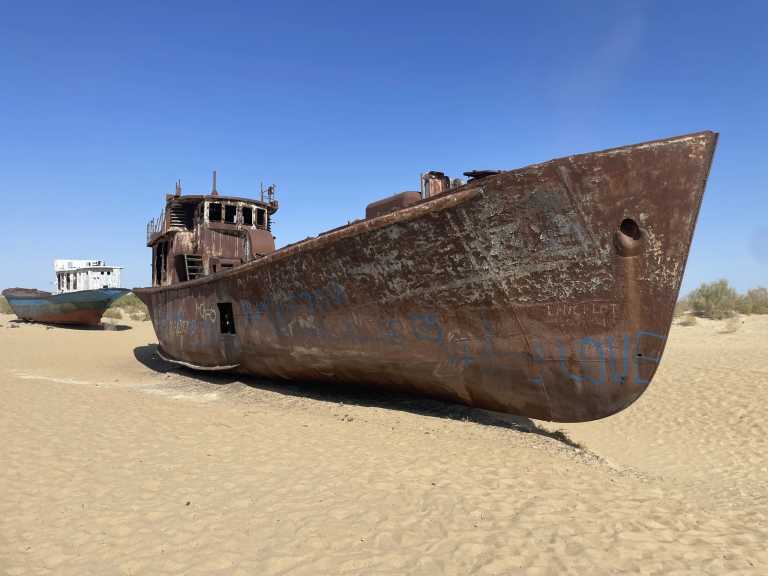
On the border of Uzbekistan and Kazakhstan. However, from the 1960s onwards it began to shrink drastically, mainly due to the gigantic irrigation projects of the Soviet era. The Amu-Darya and Syr-Darya rivers feeding the lake were largely diverted to irrigate cotton plantations, causing the lake to shrink and split into two separate parts: the northern (Smaller) Aral Sea and the southern (Larger) Aral Sea. This environmental disaster has had unprecedented ecological, economic and social consequences. Coastal towns such as Moynaq in Uzbekistan, once thriving fishing communities, now lie tens of kilometres from the receding waters, their harbours a graveyard of rusting shipwrecks bearing witness to the tragedy. Our train arrives early in the morning, we load up the Jeep(s) we will spend 3 days in. Our first stop is Muynak, once a thriving port city and fishing centre in Uzbekistan, in the Autonomous Republic of Karakalpakstan, on the shores of the Aral Sea. However, catastrophic environmental changes beginning in the 1960s dramatically transformed the town’s fortunes, making it one of the world’s most spectacular ‘disaster tourism’ destinations. Today, Muynak lies more than 150 kilometres from the remaining waters of today’s Aral Sea, and the former seabed has been transformed into the Aralkum Desert. The town’s main – and most heartbreaking – attraction is its ship graveyard. Here, the wreckage of abandoned fishing boats rusting in the sandy seabed bears witness to a vanished sea and a forgotten, thriving community. These monstrosities, once bobbing in the choppy waters, now lie in the desert, deeply embedded in the landscape, and serve as a poignant memento of environmental disaster. Lunch. We then continue along the lake bed, now a desert, towards the Ustyurt plateau. Canyons, amazing landscapes. Finally we reach the sparkling water.
4
4
Aral Sea
Tag 4-5
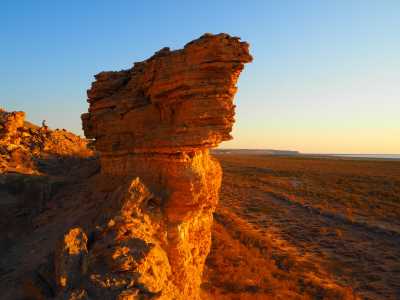
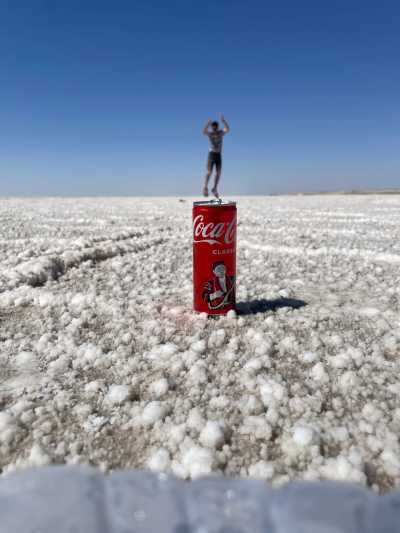
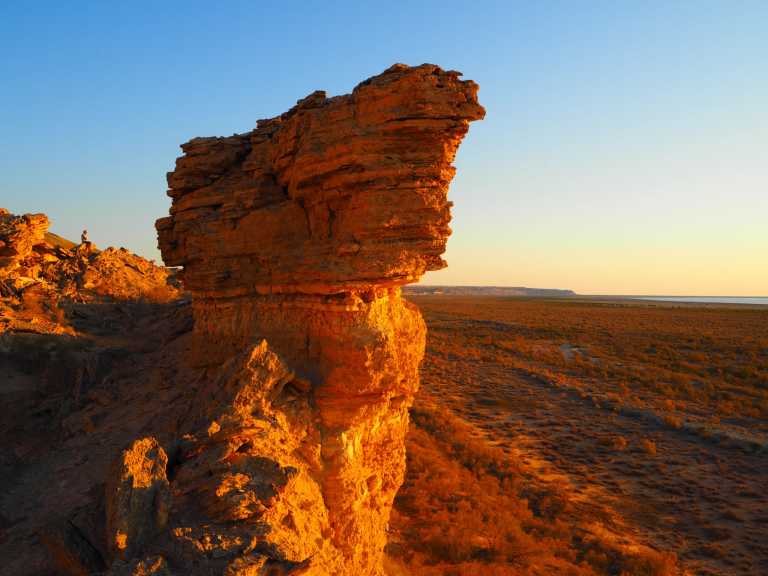
Early in the morning, we marvel at the sunrise over the endless lake bed. Packing into the jeeps, we arrive first at the Kurgancha-Kala Fort , relatively close to the now dry bed of the Aral Sea. This rare historical monument was built in the 12th-13th centuries and was an important outpost on the northern frontier of the medieval state of Horezm. A nomadic cemetery, lunch and the incredible Ustyurt Plateau follow. This is a vast desert plateau of almost 200,000 square kilometres, on the border of Kazakhstan, Uzbekistan and Turkmenistan, between the Caspian Sea and the Aral Sea. This area was once the bottom of the ancient Tethys Ocean, and geological processes and millennia of erosion have shaped it into the surreal and dramatic landscape it is today. A natural sculpture park, canyons, cliffs, stone slabs. Swimming is seasonal.
5
5
Khiva
Tag 5-6
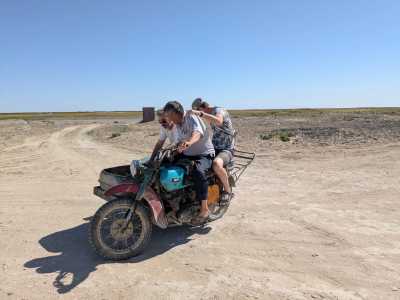
Early wake-up, it’s going to be a long day. First we arrive in Komsomolsk Kubla Ustyurt, an isolated settlement in the desert. It has often served as a logistics centre in the countryside, founded in the past for a gas pipeline. Today it is more a camel breeding area. Our next stop is Lake Sudochie, located in the western part of the Amu-darya River Delta, and once the largest inland reservoir in the Amu-darya Delta. Historically, it was connected to Lake Aral via a canal. The lake system lies on a major migratory bird route and is home to more than 230 species of birds, including herons, waders, pelicans and flamingos. 12 species are on the brink of extinction and 3 are almost extinct at national level. Next comes the Barsakelmes salt marsh. Its name derives from the Turkic languages and means “The Place of No Return”. The term reflects the isolated, rugged and mystical atmosphere of the area, once an island in the Aral Sea. After lunch, we will continue to pass through a number of photographic sites until we arrive back in Nukus. From there, it is “only” 170 km and we will be in Khiva in the fall.
6
6
Khiva
Tag 6-7
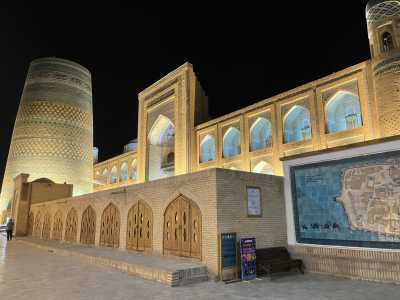
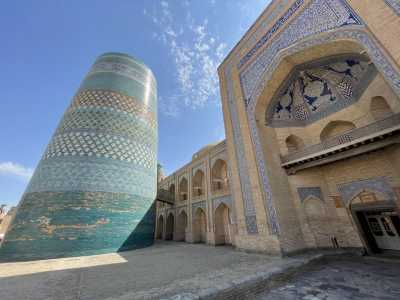
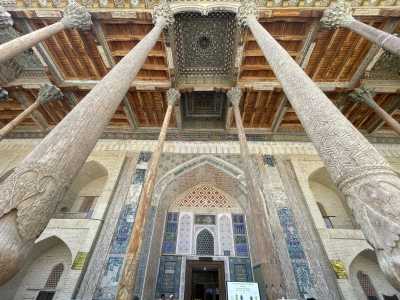
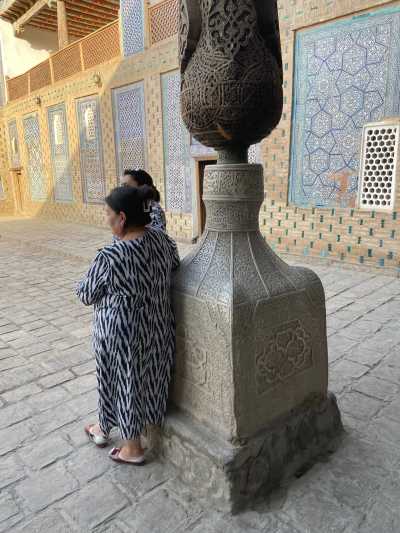
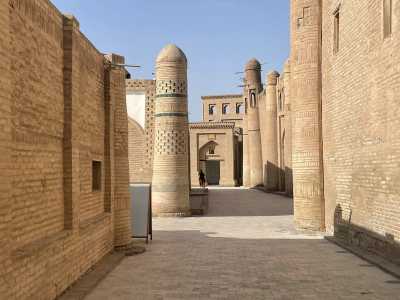
The whole day is about exploring Khiva. The Old City is also a Unesco World Heritage Site. Khiva’s inner city, Ichon-Qala, is a walled fortress with narrow streets, mud-brick houses and ornate buildings that create a unique atmosphere. Entering the city, one is immediately transported to a bygone era, where monumental minarets and elaborately detailed medres dominate the skyline. Without being exhaustive: The Minor Minaret of Kalta, although left unfinished, immediately catches the eye with its distinctive, robust shape decorated with blue and green tiles. Legend has it that the Khan planned to have it built so high that it could be seen all the way to Bukhara. The Toshhovli Palace, the former residence of the Khiva khans, is a sophisticated example of Khorezm architecture and oriental decorative arts. The palace’s courtyards and ornate halls with their carved wooden columns and tiles offer a glimpse into the opulent life of the khans. Muhammad Amin Khan’s Medresze, with its imposing dimensions and ornamentation, proclaims the former power of the Khanate.
7
7
Bukhara
Tag 7-8
We spend the morning in Khiva, aimlessly aimless, and then, after the afternoon, we take the train to Bukhara. Arrival in the evening, possibly ending the day with a dinner in the main square, first glimps of the city.
8
8
Bukhara
Tag 8-9
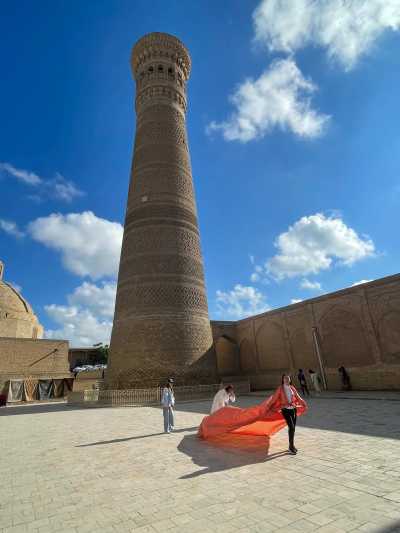
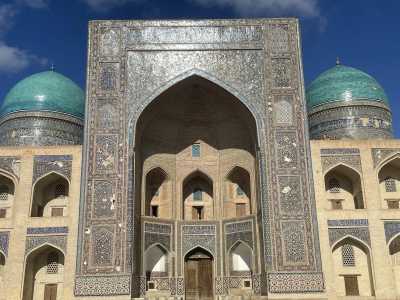
Bukhara is another jewel of Uzbekistan, boasting a rich historical and cultural heritage similar to Samarkand. It was an important stop on the Silk Road and is full of impressive mosques, medreses and mausoleums. It dates back over 2,000 years and was one of the most important centres of science, culture and theology in the Muslim world during the Middle Ages. Eminent scholars and thinkers lived here. The historic centre of Bukhara has been a UNESCO World Heritage Site since 1993, recognising the unique value of the city’s architectural masterpieces and historical significance. Compared to Samarkand, Bukhara is perhaps a slightly more intimate and relaxed atmosphere, with historic buildings clustered closely together along winding streets. After breakfast, the whole day is dedicated to exploring Bukhara. The old town has preserved its medieval atmosphere. The narrow streets, the old buildings and the life of the locals offer a journey back in time. The area around Lyab-i Hauz is particularly atmospheric for evening walks, sitting in the tea houses by the lake. Without being exhaustive, our guided walk includes. Poj-i-Kalon Complex . It is one of the most famous monuments of the city. Kalon Mosque. Mir-i-Arab Medresse: A beautifully decorated medresse built in the 16th century. Lyab Hauz Complex: a charming complex of buildings built around a lake (hauz) in the historic centre of Bukhara. Ismail Samani Mausoleum. One of the oldest and most ancient Islamic monuments, with its characteristic stone carvings and typical stone carvings: A unique medresa with four identical minarets from the 19th century. Ark Fortress: the monumental citadel of Bukhara, located in the oldest part of the city. Once the residence of emirs, it now houses museums. The fabulous East comes alive for us.
9
9
Samarkand
Tag 9-10
After breakfast, it’s back to aimless aimlessness – this time we wander individually around downtown Buhara, picking up what we missed or just relaxing in the cosy courtyard of the accommodation. In the afternoon we continue by train to Samarkand. On arrival, transfer to the hotel, followed – possibly – by a farewell dinner.
10
10
Samarkand
Tag 10
Our physical journey through Uzbekistan ends today, but the memories, the laughter over plov, and the friendships we made under the starry desert sky will stay with us forever. Thank you for sharing this incredible adventure with me. It was an honor to guide you through this beautiful land. Safe travels back to all corners of the world! Keep wandering, and let’s keep in touch. Until next time!

Hör auf zu träumen
Fang an, gemeinsam zu reisen
Nimm an Gruppenreisen teil oder plane deine eigene mit gleichgesinnten TripMates